Right now, oil prices are low — and so is the cost of virgin plastic.
But for recyclers, production costs haven’t dropped — in fact, in many cases, they’ve increased due to energy, labor, and quality demands.
This price gap is creating more pressure than ever.
And it forces us to revisit a difficult but necessary question:
Should recycled plastics really be cheaper than virgin materials?
A few months ago in a previous article, I asked another uncomfortable question:
Should we be transparent about the limitations of recycled plastics?
Back then, I closed with a sentence:
“Another day, we will discuss whether prices of these recycled raw materials should be less or more expensive than virgin material.”
That day has arrived
Why Recycled Plastics Aren’t Necessarily Cheaper
Let’s break the myth.
- Complex, multi-step processing
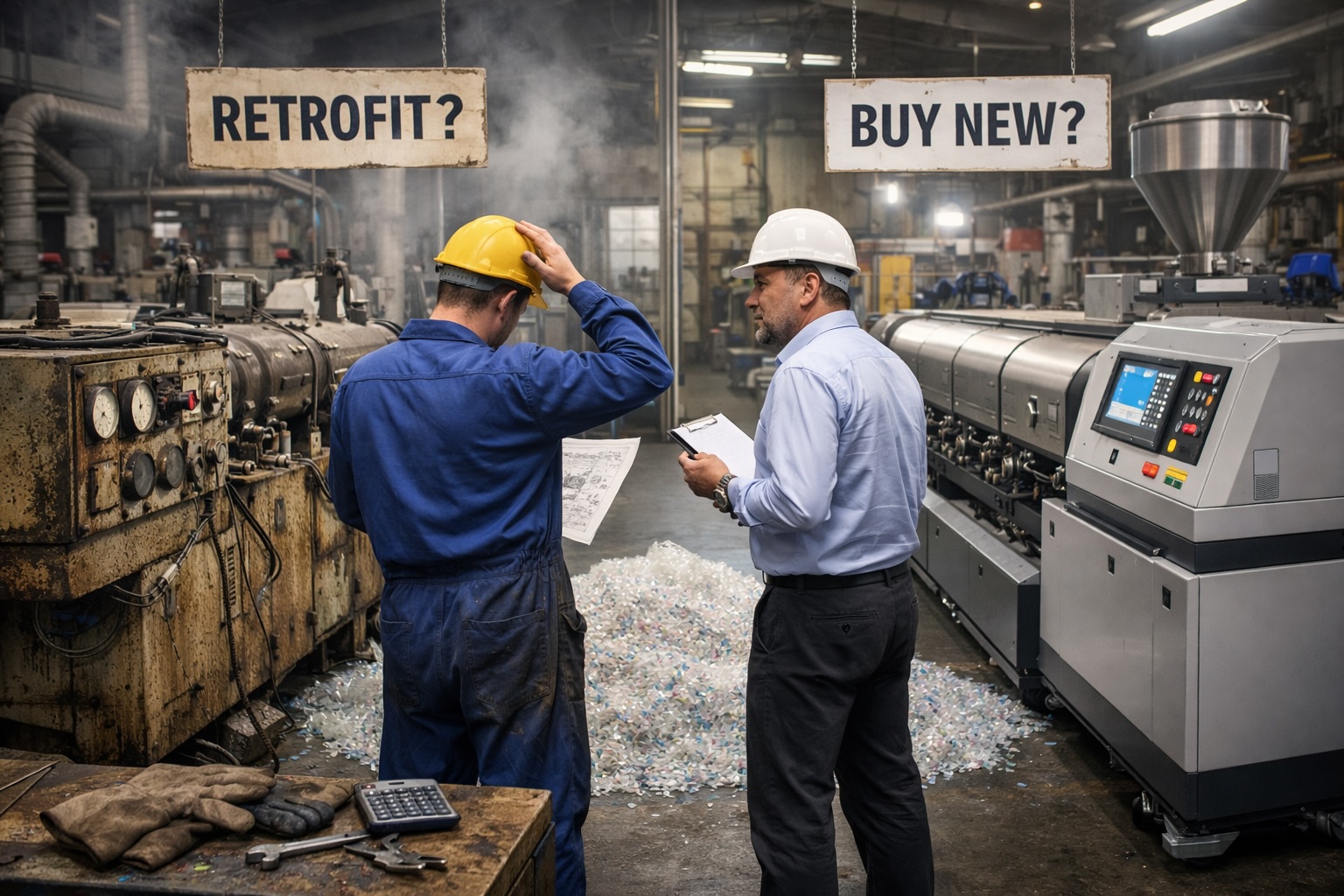
Collection, sorting, washing, drying, filtering, extrusion — and sometimes even decontamination. It’s not just recycling — it’s re-manufacturing. - Variable and inconsistent feedstock
Waste isn’t uniform. It takes effort to achieve stable quality, especially for demanding applications. - Strict regulations
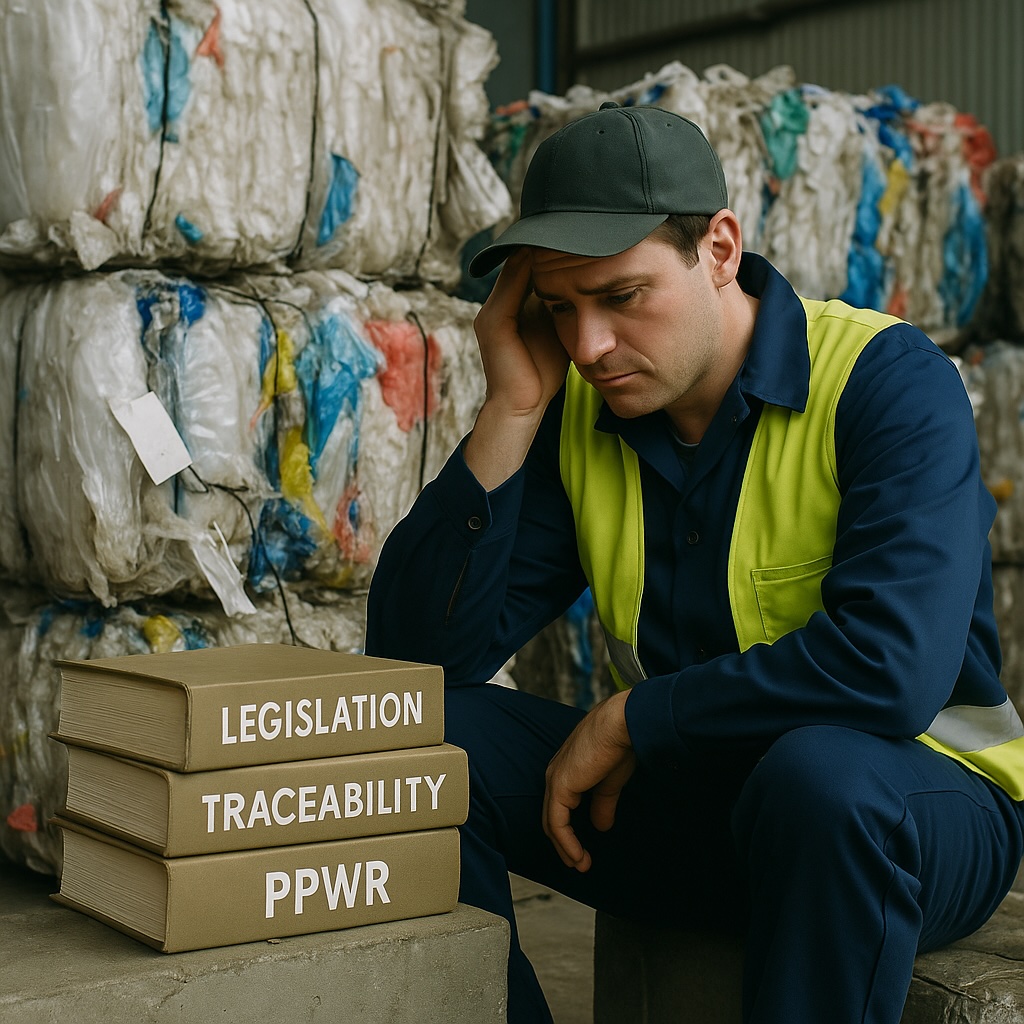
Recycled plastics used in food, cosmetics, or automotive must meetthe same quality and safety standards as virgin plastics — and that adds cost. - Market distortion by oil prices
Virgin plastic prices follow oil. Recycled plastic prices follow operations. When oil drops, recyclers feel the squeeze — even if their costs stay high.
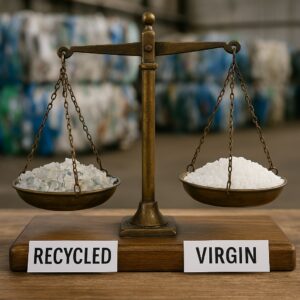
We still compare recycled plastics to virgin, expecting them to be cheaper — or at least, competitive.
But perhaps we should be valuing recycled materials differently:
- Their contribution to circularity
- Their lower carbon footprint
- Their alignment with brand ESG commitments
- Their ability to meet regulatory recycled-content targets
Maybe the question should be:
Should virgin plastic be more expensive because it doesn’t offer any of those benefits?
What’s the Real ROI of Recycled Plastics?
In many cases, the return is not in the price per kilo, but is a strategic positioning:
- Protecting access to regulated markets
- Meeting internal sustainability KPIs
- Strengthening brand perception and consumer loyalty
- Reducing exposure to future compliance costs
Recycled plastics might not always be cheaper — but they are more strategic than ever.
Do we need to stop expecting recycled materials to be low-cost?
Or will pricing always be the key driver for market growth?
What Do You Think?