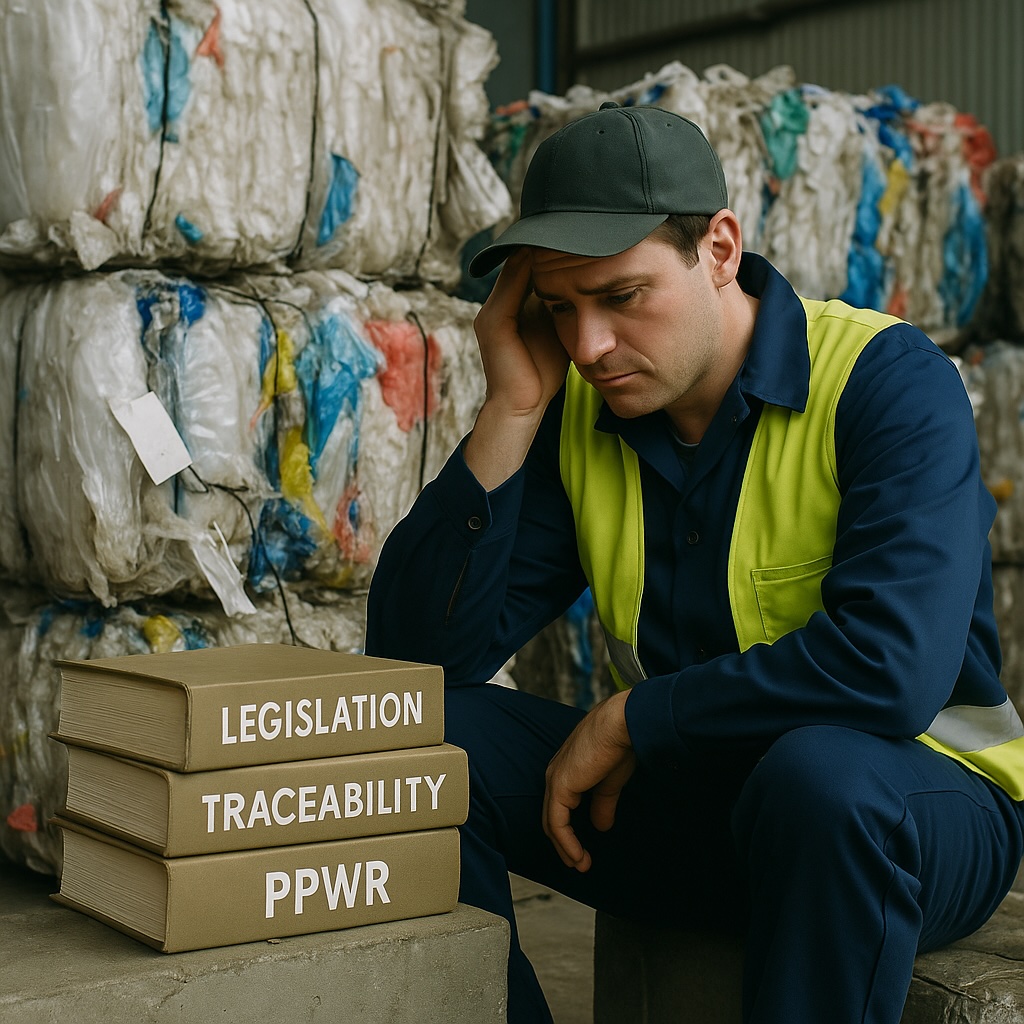
We have the most ambitious recycling legislation… and recyclers are suffocating as ever before. How is this possible?

Never before has Europe had such an ambitious legal framework for packaging recycling as with the new Packaging and Packaging Waste Regulation (PPWR). And yet, many recyclers are currently operating at the limit. Some are even shutting down.

The contradiction is here: How can there be so much regulatory demand for recycled plastic—and so little real support for the people who produce it?

PPWR and Spain’s plastic tax: heavy obligations but little oxygen

The new EU regulation sets ambitious targets for non-reusable plastic packaging:

Mandatory recycled content targets for 2030 and 2040:

Article content

In addition, by 2030, at least 50% of plastic packaging must be effectively recycled, not just collected, and the EU commits to reducing overall packaging waste by 5% by 2030, 10% by 2035, and 15% by 2040, compared to 2018 levels.

For example in my country, Spain, since January 1, 2023, a tax of €0.45/kg applies to virgin plastic used in non-reusable packaging. Products with over 30% recycled content are partially exempt, but there is still no unified EU-wide certification system to prove it, creating legal uncertainty for producers and importers.

It’s worth noting that this €0.45/kg tax does not fully cover Spain’s own contribution to the EU, which amounts to €0.80/kg for each kilogram of non-recycled plastic packaging waste. This leaves a deficit that the Spanish government must absorb through public funds.

Meanwhile, Germany has not yet implemented its own national plastic tax. Although it was initially scheduled for January 1, 2025, the German government has now postponed its introduction, currently aiming for 2026.  We will see this time what happens. Technical complexity, industry pushback, and administrative costs have delayed its rollout, as reported by FachPack News.

In the meantime, Germany launched a Single-Use Plastics Fund (EWKFondsG) in 2024, which applies a fee to products like cups, cutlery, and bags, but does not function as a general tax on virgin plastic like Spain’s.

Meanwhile, what are recyclers facing?

  • Recycled plastic prices are falling.
  • Brands want to “comply with the law”—but pay as if it didn’t exist, but nice to print the % content on their labels.
  • Virgin plastic remains cheaper and more attractive in appearance.
  • Operating costs keep rising: energy, labor, certifications, audits, etc.
  • Input material is often dirty or poorly sorted, degrading output quality.

In short: more legal pressure, less operational margin.
Deposit Return Schemes (DRS) the solution?

Europe is making efforts increasing the Deposit Return Schemes (DRS). These systems are already in place in 17 countries and must be operational in all EU Member States by 2029, under the PPWR.

These schemes, based on consumers paying a deposit they recover when returning a container, have proven highly effective:

  • Germany: return rate over 98% (TOMRA)
  • Norway: globally recognized system with a 92% return rate (TOMRA – DRS FAQs)
  • Lithuania: increased from 34% to 92% recovery in just two years (TOMRA)
  • Ireland: launched in February 2024, has already collected over 630 million containers, cut litter on beaches and streets by 50%, and raised funds for NGOs (The Guardian)
  • Austria: implemented its scheme in January 2025, with deposits between €0.15 and €0.25 per container (TOMRA)

These models ensure very high collection rates, cleaner material, and a more predictable feedstock for quality recycling.

But we have a great contradiction

  • Policymakers demand recycled content.
  • Brands want compliance—but at the lowest possible cost.
  • Consumers want clean, recyclable, good-looking packaging.
  • And recyclers—the ones turning waste into raw material, making the miracle —are the ones who can’t keep up.

Without minimum price guarantees, clear demand incentives, or protection against cheap virgin imports, the PPWR targets could easily remain just wishful thinking.

My final thoughts

Europe will not become circular with regulations alone. Real recycling needs more: economic conditions that allow recyclers to survive and grow, and these means benefits.

We cannot demand more from the weakest link in the chain without giving them the tools to endure.  Just see the dimensions and turn-over numbers of the other players in the chain: Municipalities?, Waste Managements companys?, bottle producers? and brand owners? Recyclers are small ants playing with elephants, because if recyclers disappear, the rest becomes just talk and will have to be created.

And here’s the paradox: there have always been recycling companies that closed in the past, but back when we were less visible and kept a lower profile, most recyclers lived with more peace of mind—and better margins.

Note: Some figures may vary slightly depending on the source and date of publication. Every effort has been made to verify and cite all data as rigorously as possible.

Consulting Services in Recycling

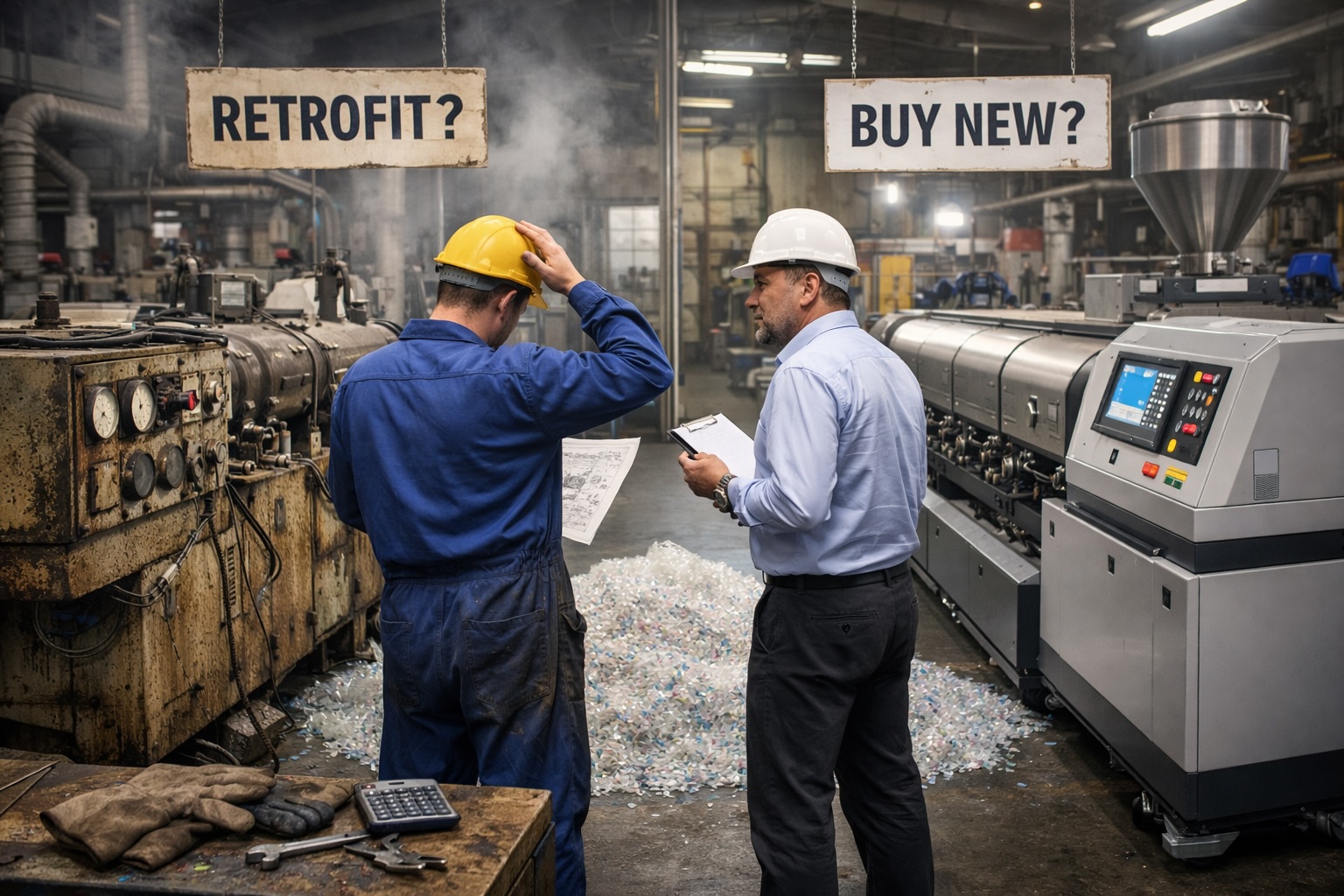
Starting Up a New Plant or Modifying Your Existing Facility

Are you considering the installation of a Polyethylene recycling plant or looking to enhance your existing facility? EcoPlast Consulting is here to guide you. With our extensive knowledge of the sector and a trustworthy approach, we act as your vigilant partner. We oversee your investments to ensure you purchase exactly what you need at the best price, always with an eye toward maximizing your efficiency and profitability. Trust us to safeguard your interests every step of the way.

Advanced Recycling Processes and Technology Solutions

Product Design for Recyclability

In today’s sustainability-focused market, the recyclability of a product is as crucial as its functionality. At EcoPlast Consulting, we guide you through the design process to ensure your products are not only efficient but also fully recyclable. We provide expert advice on how different components can enhance or impede the recycling process, helping you make informed decisions that align with best practices in environmental sustainability.

Waste Technology and Recycling Facilities

Support with funding applications for recycling and resource efficiency projects

Securing funding for recycling and resource efficiency projects is critical for advancing your sustainability goals.
At EcoPlast Consulting, we specialize in assisting clients with the preparation and submission of funding applications. Our expertise ensures that your proposals are well-crafted, highlighting the environmental and economic benefits of your projects to maximize the likelihood of approval.
Additionally, we will act with the utmost discretion to help you find the best buyer or funding body for your projects. Let us help you navigate the complexities of funding applications to successfully secure the financial support you need for your initiatives.

Audits of Waste Supply Chains

Audits of Waste Supply Chains and Recycling Operations (Qualitative and Quantitative Evaluation)

EcoPlast Consulting provides detailed audits of your waste supply chains and recycling operations to ensure both consistency and quality. We offer evaluations of potential suppliers, including on-site visits when authorized, and thorough analyses of supply sources, processes, and quality controls. Our approach gives you the assurance of knowing exactly what you are purchasing and ensures that you receive consistent quality over time. Trust us to maintain integrity and transparency throughout your supply chain.

Funding Applications for Recycling Projects

Comprehensive Due Diligence and M&A Consulting for the Plastics Industry

EcoPlast Consulting provides in-depth technical due diligence and strategic M&A consulting services, specifically tailored for the dynamic plastics sector. Our evaluations focus on the condition, efficiency, and capacity of machinery, alongside a review of production reports from your operations, ensuring you make well-informed investment and acquisition decisions.
In the rapidly evolving recycling and plastics processing industries, understanding the physical wear and technological advancements of machinery is critical. Our detailed assessments help you grasp the full scope of your potential investments, avoiding costly mistakes and ensuring your investments are future-proof. Additionally, we offer post-acquisition consulting to strategic buyers, middle-market private equity firms, family offices, and financial institutions within the plastics industry. We excel at identifying risks and uncovering opportunities that achieve operational synergies, maximize exit valuations, and enhance returns on investment.
Trust EcoPlast Consulting to provide the expertise needed for your next venture, helping you navigate complex transactions with customized, comprehensive solutions.

Product Design for Recyclability

Advanced Recycling Processes and Technology Solutions

At EcoPlast Consulting, we assist in enhancing your recycling processes with cutting-edge technical solutions that prioritize product quality, cost-effectiveness, and space efficiency. We design systems to minimize the spatial footprint at your facilities while maximizing operational efficiency. Our approach ensures that the investments you make in recycling technology not only meet but exceed environmental and economic goals.

Starting Up a New Recycling Plant

Assessment and development of waste technology and recycling facilities

At EcoPlast Consulting, we specialize in evaluating your current waste management and recycling technologies to determine if they meet the latest standards of efficiency and innovation. We conduct thorough cost-benefit analyses to ensure that upgrades lead to rapid returns on investment. Our expert guidance helps you identify and implement cutting-edge developments, positioning your operations at the forefront of technology and product quality. Trust us to elevate your facilities to industry benchmarks.

Consulting Services in Recycling

Expert Management Advisory and Strategic Business Growth Initiatives

At EcoPlast Consulting, we specialize in providing hands-on support to a broad range of businesses outside the waste sector, including retailers and supermarkets, helping them reduce waste management costs and maximize resource efficiency. Leveraging our extensive industry network, we develop customized waste management strategies tailored to the specific needs of each business. Our independence from waste management companies and equipment suppliers ensures that our clients receive unbiased, comprehensive guidance designed to deliver measurable results.