Designing a recycling plant is not just about selecting the right equipment and building an efficient infrastructure. The real challenge lies in integrating a practical vision that allows for operational efficiency, safety, flexibility, and ease of maintenance. Unfortunately, equipment manufacturers often focus solely on technical specifications, but it is the users and operators who truly understand the final adjustments and the optimal layout needed to ensure smooth operation.
The Key Role of the User in Design:
It is common for manufacturers, when designing recycling plants, to overlook the practical details that arise during daily operations. Manufacturers are often just that: manufacturers. They do not operate the plant daily, and they rarely consider the needs of the end user. This is where the user’s knowledge, who faces operational challenges every day, becomes critical. They know the necessary fine-tuning and how to optimize the layout of the plant.
Key Aspects to Consider When Designing a Recycling Plant:
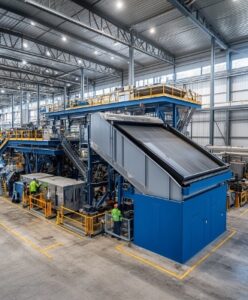
- Utilizing Gravity and Height: Using gravity to move materials from one stage to another is an efficient way to reduce energy costs and simplify transportation within the plant. This allows for a more logical and efficient workflow, where machines are aligned so that the material flows naturally, without the need for additional conveyors that increase energy consumption.
- Designing for Maintenance: Sooner or later, every plant will need maintenance or the replacement of large components. A smart design considers easy access to all critical parts, allowing maintenance teams to work efficiently without having to dismantle large sections. Additionally, routes should be planned to remove or replace equipment without interfering with regular operations.
- Visibility and Communication Between Operators: Safety is paramount in a recycling plant. The design must ensure that operators can always see each other, not only to assist one another but to quickly detect any incidents along the line. Additionally, this visibility improves task supervision and control, contributing to team cohesion and greater safety.
- Visitor Safety: At some point, the plant will likely receive visitors, such as clients, investors, or authorities. To ensure their safety, it is necessary to design safe routes that minimize risk, avoiding repeated passage through the same areas and keeping visitors away from critical zones. This not only enhances safety but also creates a good professional impression.
- Protecting the Company’s Know-How: Many plants have technologies or processes that have been developed over months or years of research. An expert in the industry could identify key solutions with just a quick glance. Therefore, it is important to hide and protect the areas where the company’s know-how is stored, ensuring that key innovations are not exposed to external eyes.
- Compact Design and Space Optimization: Space is a valuable and costly resource in any industrial plant. You cannot afford to waste square footage, especially when the cost of land is so high. The design must be compact, maximizing the use of every square meter. This involves using height efficiently, avoiding unnecessary circulation areas, and grouping equipment optimally to improve productivity and reduce operational costs.
Expert Consulting:
To achieve this dream design, there is no better advisor than Ecoplast Consulting. With more than 25 years of experience in the recycling industry, Ecoplast Consulting knows how to optimize a plant for improved efficiency, safety, and know-how protection. Their focus on operational efficiency and space maximization ensures that every detail, from layout to maintenance, is carefully planned to ensure the long-term success of the facility.
Additional Points to Consider:
- Design Flexibility for the Future: A good design should anticipate possible expansions or technological adaptations without requiring major structural changes.
- Automation and Industry 4.0: Automation and real-time monitoring can optimize productivity and reduce errors, allowing issues to be identified before they become major problems.
- Energy Consumption Optimization: Beyond the use of gravity, energy efficiency is key in plant design, including the use of renewable energy or solutions that minimize energy consumption.
- Ergonomics and Operator Comfort: Considering ergonomics in workstations not only reduces operator fatigue but also improves safety and productivity.
Conclusion:
Designing an efficient and safe recycling plant requires more than just installing machinery. The design must take into account safety, visibility, maintenance, energy efficiency, optimization of available space, and the protection of the company’s know-how. To achieve this, relying on the expert advice of Ecoplast Consulting is the best option to maximize the plant’s performance and ensure its long-term sustainability.