Post-consumer plastics recycling is not enjoying its best market moment: pricing is under pressure, input streams are volatile, and buyers are cautious. What is having its best moment in years is the technology: better sorting, extruders with deep degassing, thermal deodorization silos and more effective additives that lift the sensory quality of PCR.
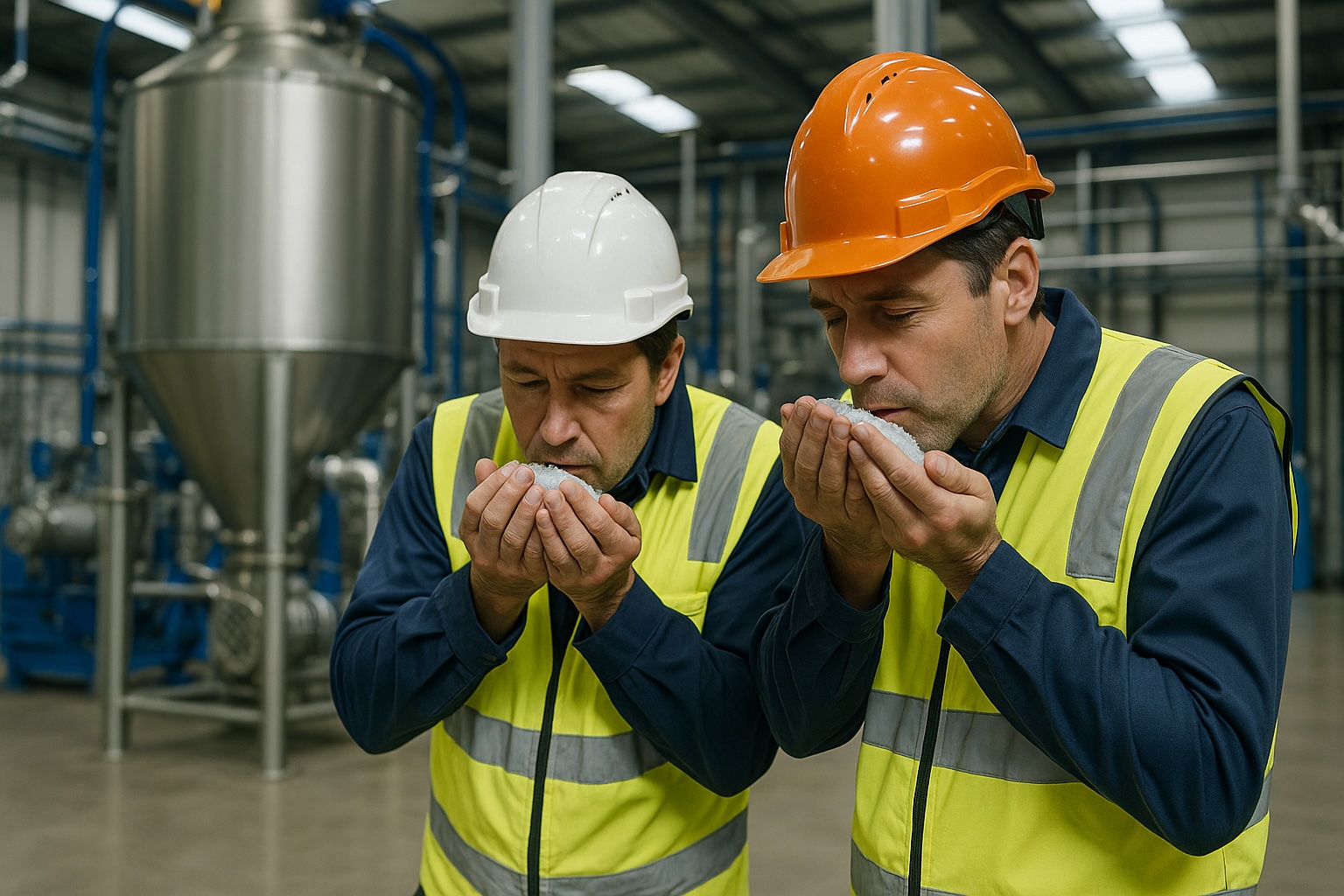
Today we won’t talk about economics or markets. We’ll focus on the technical side—the part we truly master and can control on the shop floor: what causes odor, how to remove it, and why doing so unlocks perfumed or odor-sensitive applications (detergents, cosmetics, home care).
Where odor comes from in recycled plastics
The origin is multiple and cumulative. On one hand, post-consumer packaging adsorbs volatile compounds from the products it contained (detergents, oils, perfumes), which get trapped in its structure. On the other hand, during shredding, washing, drying, and extrusion, new odors can form through residual waste, thermal decomposition, oxidation, or even residual moisture that favors microbial activity. The odor is a mix of what the plastic “absorbed” and what we “cooked” while processing it.
Odor isn’t a defect of recycling; it’s the trace of its origin. The difference lies in who knows how to remove it well.
How odor is removed (in plant order)
1. Washing: staged hot-wash and rinsing
Odor reduction actually begins in the washin line. A well-designed sequence of tanks—from dirtier to cleaner water in counter-current—using controlled temperature, the right surfactant/alkaline chemistry (sometimes), and sufficient residence time removes product residues, label adhesives, biofilms, and fines adhered to the outer surface of the plastic. Friction washers, flotation steps, and high-speed centrifuges help detach and separate organics and glues; efficient rinsing prevents re-deposition. Effective dewatering and hot-air drying minimize residual moisture, which otherwise favors microbial activity and off-odors. Keeping wash tanks filtered and regularly refreshed (with proper water treatment) avoids recycling odors back into the flake. By lowering the incoming volatile load, washing makes downstream degassing and thermal deodorization far more effective.
2.Degassing in extruders
The second big change happens in extrusion. When the polymer is molten, odor molecules become more mobile and can migrate to the surface; at that moment, vacuum vents—often multiple and at deep vacuum—pull volatiles out efficiently. The principle is physical: temperature and pressure drop increase diffusion from within the melt. In materials like post-consumer HDPE/PP with household residues or rPET with aldehydic notes, this stage is decisive. That said, if the incoming volatile load is high or very tenacious notes persist, degassing alone usually isn’t enough and should be reinforced downstream, which is what occurs 95% of the times if you want to remove the odor.
3.Thermal deodorization in a silo
After pelletizing, foreign compounds can remain in the core of the pellet. Hot-air (or steam) silos in countercurrent create a thermal gradient that drives those molecules out into the gas flow, sometimes assisted by vacuum pulses. This step deepens and polishes what extrusion didn’t reach, with a clear effect on background odors. Residence time combined with hot air flow and vacuum make the diference. Good washing plus effective degassing and silo deodorization is today’s baseline combo for high-quality PCR.

4.Controlled oxidation with ozone or plasma
When surface notes or especially persistent compounds remain, some operators use ozone or cold plasma on flake or pellet. Both rely on oxidation: breaking bonds in volatile organics and converting them into less odorous species (up to CO₂ and water). These are clean, powerful processes, but they demand precise dosing and timing to avoid damaging the polymer or altering its performance in conversion. Used well, they’re a fine-tuning tool—not a substitute for the previous stages.
5.Neutralizing or absorbing additives
The final tweak can come from masterbatches designed to capture or neutralize residual molecules. Their logic is chemical or physico-chemical (absorption/adsorption) and they help reduce olfactory perception without changing the thermal process. Professionally, these additives are used as a finishing layer after tackling the root cause of odor; perfuming a core problem only hides it temporarily and won’t withstand audits or customer validation. Personally we do not like them too much but in certain cases they are effective.
Why it’s worth it—despite the cost
Adding these stages can raise OPEX by 10–30% or even more sometimes, but it changes the market for your material: you access cosmetics, detergents, and home care where the price per kg is higher; consumers stop sensing a recycled smell and trust the brand; and commercial relationships become more predictable, with fewer claims.
Think of a realistic case: an HDPE recycler integrates double deep-vacuum venting and a hot-air deodorization silo. In six months, they move from supplying pellets for industrial injection (buckets) to signing contracts with liquid-detergent brands. Same polymer, new sensory standard; the result is a better price and higher value for the product.
Removing odor isn’t just cleaning the material; it’s multiplying the potential outlets for the material.
Conclusion: smelling good is part of recycling well
In the circular economy ahead, sensory quality will weigh as much as MFI or color. Investing in odor removal isn’t a cost; it’s a strategy for quality and trust that anchors PCR in high-value applications and shows it can compete head-to-head with virgin.
Naturally, these steps raise certain risks. If temperature is too low, odor removal is ineffective; if it’s too high, the polymer can soften or melt, leading to blockages in screens, die heads or piping. This is why tight control of temperature, vacuum and residence time—backed by alarms and validated run recipes—is critical.
The next big leap in recycling won’t be only about more tonnage, but about materials that do note smell.
For debate: what combination works best in your plant for “no-odor” PCR—double vent plus thermal silo, deep vacuum plus plasma, or another recipe?
#PCRPlastics #OdorControl #Degassing #Deodorization #CircularEconomy #Consulting