I’m not sure this has been asked enough times, but why isn’t virgin plastic legally required to include a minimum amount of recycled material content?
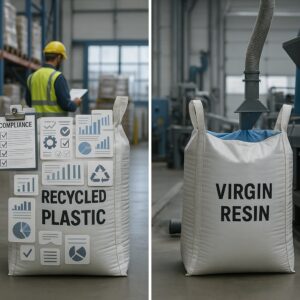
We already have regulations that mandate recycled content in single-use plastics, particularly in packaging and bottles. But the raw resins themselves — the materials produced by petrochemical companies — are not subject to any legal obligation to contain recycled content and this is where everything starts.
Wouldn’t it make sense to start there?
Imagine if all virgin plastic resins had to contain just 5% recycled content. The result?
- A new and stable outlet for recyclers
- A baseline market that stimulates demand for high-quality PCR
- Stronger incentives to invest in collection and sorting infrastructure
- A shift in the petrochemical industry from “linear suppliers” to circular enablers
Right now, the focus of regulation is placed almost entirely on finished products — not on the source of the material.
A Missed Opportunity for Collaboration
Instead of treating virgin and recycled plastics as rivals, why not connect them as partners?
The industry talks about collaboration, circularity, and responsibilitybut without clear policies to integrate recycled content into virgin supply, recyclers remain alone.
In fact, forcing this integration would push resin producers to support:
- Better feedstock quality (through design for recycling)
- Stable supply partnerships with recyclers
- Investment in large-scale mechanical and chemical recycling technologies
- A reduction in the price gap between PCR and virgin
There’s also the issue of color compatibility, which we’ll explore more deeply in a future article. In short: while virgin resins are typically produced in a few standardized tones (natural, white, blue for water, yellow for gas), recycled plastics come in a wide range of post-consumer colors.
Mixing them leads to greys or inconsistent ugly tones, not suitable for many product applications and difficult to reintroduce into high-value manufacturing.
This is where marketing and product design teams could play a key role: reducing the use of strong or varied colors in the base plastic and shifting branding creativity to labels or packaging, we could increase the circular compatibility of materials without losing brand identity.
And the Argument Against?
Some will say: “But what if PCR availability isn’t enough?”
Fair point ok, but that’s why the obligation could be progressive and adaptable, tied to some useful metrics.
The point is not to penalize production. The point is to create a stable foundation for circularity, backed by policy, not just voluntary commitments or brand-level initiatives, this is not working completely.
Why do we ask recyclers to scale up, invest, certify and survive in volatile markets but place no mandatory responsibility on virgin resin producers?
If we’re serious about closing the loop, then looping PCR into the source is the logical next step.
Let’s stop treating recycled plastic like a side project that must solve THE problem, lets go to the root: virgin resin
What do you think?
Would a minimum recycled content requirement in virgin plastic help balance the system?
Let’s read your comments
#CircularEconomy #PlasticRecycling #RecycledContent #Sustainability